Tuesday, July 19, 2016

Pro-Lifers Are Trying To Force Their Beliefs On Other People

This is taken from Is Abortion Really So Bad?  by Dr. Joel Beeke, a pastor, theologian and seminary professor.

Pro-Lifers Are Trying To Force Their Beliefs On Other People

What is the justification for legal abortion? Let us examine the arguments used by those who promote abortion to determine on how strong of a foundation this practice is based.

Argument 7:


Pro-Life Advocates Are Trying To Force Their Beliefs On Other People


In reality, all who participate in an abortion force their views on another, namely on the unborn child—so strongly, in fact, that it results in his or her death. If the unborn child is a human being, then how can one be accused of trying to force his own belief on another when trying to protect the life of the child from his or her killer? If the unborn child is a human being, then abortion is murder. If abortion is murder, we must do all in our power to stop it.

The Declaration of Independence says, “We hold these truths to be self-evident, that all men are created equal, that they are endowed by their Creator with certain unalienable rights, that among these are life, liberty and the pursuit of happiness—that to secure these rights, governments are instituted among men, deriving their just powers from the consent of the governed.” Currently the rights of some people are more “equal” than others are because their “liberty and the pursuit of happiness” apparently justifies taking the “life” of others. This seriously undermines the political foundation of our nation. But if people exercise their popular power of voting to direct the government to protect all people’s right to life, they simply do what the Declaration of Independence says they should

After critically examining seven basic arguments for abortion upon demand, can we honestly conclude on a rational and ethical basis that abortion should be legal? These arguments are flimsy reasons for murdering more than a million babies each year. This is especially evident when we consider that less than 5% of all abortions are for reason of rape, incest, or a danger to the mother’s life. More than 95% of abortions take place for the sake of finances, career, personal convenience, or other selfish reasons. Are these compelling reasons for killing human beings?

So far, we have concentrated on defeating the pro-abortionists’ arguments on their own ground. But there are many other aspects of abortion: the screams of the unborn as they suffer pain and death; the cutting, slicing, burning, poisoning, and bleeding accompanying abortion; the tragic burial of the unborn in trash cans or their cremation in incinerators; the post-abortion anxiety, depression, sense of loss, anger, remorse, nightmares, infertility, and flashbacks of murdering mothers.

Let us now turn to a higher court of authority than human reasoning and human consequences. We are called to the even more important task of positively setting forth the truths and proclamations of God’s Word that are involved directly and/or indirectly in the issue of abortion. “To the law and to the testimony: if they speak not according to this word, it is because there is no light in them” (Isa 8:20).

Monday, July 18, 2016

Better To Die Before Birth Than To Live As An Unwanted Child

This is taken from Is Abortion Really So Bad?  by Dr. Joel Beeke, a pastor, theologian and seminary professor.

Better To Die Before Birth Than To Live As An Unwanted Child

What is the justification for legal abortion? Let us examine the arguments used by those who promote abortion to determine on how strong of a foundation this practice is based.

Argument 5:


Better To Die Before Birth Than To Live As An Unwanted Child


First, to give a human being the power to determine the future life of another individual based on whether he is “wanted” or “unwanted” is most dangerous. Do we have the right to kill people based on whether or not we want them? Such a viewpoint leads highly cultured societies to commit genocide against the mentally challenged and “inferior” races.

Second, is the child never wanted by anyone? Many mothers did not want the pregnancy but cherish the child, especially after birth. There are also many parents who want to adopt a child. To say that the child is not wanted now by its mother does not mean it will never be loved.

Third, this argument has horrifying implications for “unwanted” children already born. If it is better to kill the baby than to let it be unwanted, then what does that imply about homeless children? Children with abusive parents? Would it be loving to kill these children? Of course not; love calls us to teach their parents to care for them or to find parents for them. In the same way, if unborn children are truly “unwanted,” we should try to help their mothers to see them differently or help the children to find adoptive parents. Did you know that Steve Jobs was unwanted by his birth mother and the adopted parents the government initially chose?

Fourth, what gives us the right to decide whether it is better for a person to live or to die? Are we the owner of that person’s life? Do we know with certainty the child’s future? Do not many “unwanted” children overcome severe physical or emotional handicaps in their youth and function as useful adult citizens? Do not many people in painful situations nevertheless wisely choose to live rather than to kill themselves?

In the end, the seemingly compassionate argument for the “wanted” child makes no sense at all. At best, it is an emotional, illogical appeal; at worst, it is a mask for deadly selfishness.

Sunday, July 17, 2016

Illegal Abortion Would Lead To Dangerous Back-Alley Abortions

This is taken from Is Abortion Really So Bad?  by Dr. Joel Beeke, a pastor, theologian and seminary professor.

Illegal Abortion Would Lead To Dangerous Back-Alley Abortions

What is the justification for legal abortion? Let us examine the arguments used by those who promote abortion to determine on how strong of a foundation this practice is based.

Argument 5:


Illegal Abortion Would Lead To Dangerous Back-Alley Abortions


The idea of the crudely done abortion resulting in a bleeding, dying mother (and a dead child) has been widely used by abortion advocates. But in reality, 90 percent of abortions performed before they became legal were done by physicians in their offices. The idea of thousands of women dying yearly until abortion was legalized is a myth. In 1972, thirty-nine mothers died in the United States from abortions. The American Journal of Obstetrics and Gynecology (March 26, 2010) admits that the legalization of abortion has had “no major impact on the number of women dying from abortion in the U.S... legal abortion is now the leading cause of abortion-related maternal deaths in the U.S.”

Every woman who dies from a botched abortion is a tragic loss. But so is every child who dies from a successful abortion. We should not make it legal to kill babies in order to make the killing safer for the adults involved. Furthermore, abortion has medical and psychological risks; making it illegal would actually protect the lives and health of millions of women.

Saturday, July 16, 2016

Private Matters Into Which We Must Not Intrude

This is taken from Is Abortion Really So Bad?  by Dr. Joel Beeke, a pastor, theologian and seminary professor.

Private Matters Into Which We Must Not Intrude

What is the justification for legal abortion? Let us examine the arguments used by those who promote abortion to determine on how strong of a foundation this practice is based.

Argument 4:


Private Matters Into Which We Must Not Intrude


We believe that human sexuality is a very private matter: it expresses the deep intimacy that a husband and wife share. But sex has very public consequences. How we exercise our sexuality contributes to the restraint or spread of disease, the treatment of women with honor or rape, the nurture or sexual abuse of children, and the strengthening or dissolution of families which are the foundation of society. Society therefore has a compelling interest to guard the dignity of marriage, women, and children with respect to sex and reproduction.

People sometimes argue that the U.S. Constitution guarantees the right to privacy in sexual and reproductive matters. Read the Constitution, and you will not find any such right there. In reality, the Fourth Amendment acknowledges the right of security against “unreasonable searches and seizures” without a “warrant,” but says nothing about sexuality, children, or abortion.

Someone might sarcastically say, “I thought what I did in my bedroom was my own business.” But if there is reasonable cause to believe that you are murdering a child in your bedroom, then it becomes a matter of public intervention by the authorities. Privacy is not an absolute moral right. But killing a child is an absolute moral wrong.

Friday, July 15, 2016

A Woman Has A Right To Do With Her Body As She Desires

This is taken from Is Abortion Really So Bad?  by Dr. Joel Beeke, a pastor, theologian and seminary professor.

A Woman Has A Right To Do With Her Body As She Desires

What is the justification for legal abortion? Let us examine the arguments used by those who promote abortion to determine on how strong of a foundation this practice is based.

Argument 3:


A Woman Has A Right To Do With Her Body As She Desires.


We affirm a woman’s authority over her body. But there are limits to what we can rightfully do with our bodies, including causing harm to another human being. Abortion involves the death of her child. To argue that the living fetus is part of the mother’s body defies reason: which organ of her body is it? When the unborn child’s heart beats, whose heart is it? When the fetus’s brain waves can be traced, whose brain is it? Every pregnancy involves two people, a mother and a child; the rights of both must be considered.

Whenever we speak of the rights of two human beings, we must guard against the more powerful person taking advantage of the weaker person. It is the responsibility of the powerful to protect the weak. It is especially the responsibility of a mother to protect her child. Does any mother have the right to do whatever she pleases with her children? On the contrary, she has the responsibility of caring for them or seeing that someone else cares for them. Certainly, motherhood calls for sacrifice. We should expect adults to make sacrifices of their resources and freedoms when necessary to preserve the lives of children.


Thursday, July 14, 2016

The Fetus Is Not Fully Human Because It Is Dependent On Another

This is taken from Is Abortion Really So Bad?  by Dr. Joel Beeke, a pastor, theologian and seminary professor.

The Fetus Is Not Fully Human Because It Is Dependent On Another

What is the justification for legal abortion? Let us examine the arguments used by those who promote abortion to determine on how strong of a foundation this practice is based.

Argument 2:


The Fetus Is Not Fully Human Because It Is Dependent On Another.


Is a baby kangaroo not a kangaroo because it lives in its mother’s pouch? Of course not. The location and situation of a human being does not make him or her any less human. Arguments for abortion based on dependence tread on dangerous ground. If dependency makes a person less human, then on that ground we would have the right to kill infants outside the womb, people on dialysis, handicapped people, and the elderly. May we kill all dependent people?

Consider two mothers several months into their pregnancies. One child is born prematurely, and the other remains in the womb. The first is utterly dependent on medical intervention to survive, and the other on her mother’s body. Is it right to kill the prematurely born baby? How would the hospital staff react if the mother entered the neonatal ward with a knife to attack her child? If it is not right to kill the premature child, then why is it right to kill the child in the womb? Both are dependent. Both are children. Both must have legal protection.


For a short video on this aspect of providing pro-life answers, check out this post.

Does Human Personhood Depend on Degree of Dependency?

The Fetus Is Not Fully Human Because It Is Dependent On Another.

Wednesday, July 13, 2016

The Fetus Is Not A Human Life, Therefore It May Be Killed

This is taken from Is Abortion Really So Bad?  by Dr. Joel Beeke, a pastor, theologian and seminary professor.

The Fetus Is Not A Human Life, Therefore It May Be Killed

What is the justification for legal abortion? Let us examine the arguments used by those who promote abortion to determine on how strong of a foundation this practice is based.

Argument 1:


The Fetus Is Not A Human Life, Therefore It May Be Killed


While the fetus will eventually become a human child, this argument says it is not yet so. But science indicates otherwise. First, the words embryo and fetus are Greek and Latin words that simply mean “young one.” When scientists speak of a human embryo or fetus, they are not putting it in the category of another species, but are simply using technical terminology for a stage of development, like the words infant, child, adolescent, and adult. A human fetus is a young human person in the womb. It is natural and correct for mothers to speak of the fetus as “my baby” or for pregnancy books to say “your child.”

Second, from conception, the child has its own genetic code that clearly identifies it as homo sapiens—part of the human race. The child’s DNA also has a distinct code from the mother, showing that he or she is not a part of her body, but a distinct individual living temporarily within her.

Third, ultrasound imaging shows that very early in the process of development the embryo grows into a recognizable human form. The child is not a blob of tissue, but a highly complex, though tiny, baby. At three weeks after conception, a baby’s heart begins beating and pumping blood through the body. At six weeks, a baby’s brain waves are traceable. Virtually all surgical abortions silence a beating heart and a functioning brain. At eight weeks, the arms, hands, legs, and feet are well developed and the child’s fingerprints are starting to form. At eleven weeks after conception, all of the baby’s internal organs are present and functioning. By the end of the first trimester, the baby kicks, spins, somersaults, opens and closes hands, and makes facial expressions.

By any reasonable standard, a human fetus is a young human being. To kill an innocent baby is murder. That’s why the products of abortion are so ugly: severed hands, feet, and heads, wrapped up in bags and discarded. On an intuitive level, we know this. People can shrug off the image of a side of beef or a chicken drumstick, but images of abortion horrify and grieve us because they are images of a dismembered human body. Unborn children are precious human beings and must be protected.

Tuesday, July 12, 2016

Does Human Personhood Depend on Degree of Dependency?

[video width="1280" height="720" mp4="http://www.brendonward.org/wp-content/uploads/2016/07/Level-of-Development.mp4" autoplay="true"][/video]

Does Human Personhood Depend on Degree of Dependency?


The unborn is dependent upon the mother’s body for nutrition and a proper environment. It’s hard to see, though, how depending upon another person disqualifies you from being a person. Newborns and toddlers still depend upon their parents to provide nutrition and a safe environment. Indeed, some third-world countries require children to be breast fed because formula is not available. Can a mother kill her newborn son because he depends on her body for nutrition? Or, imagine you alone witnessed a toddler fall into a swimming pool. Would you be justified in declaring him not valuable simply because he depended on you for his survival? Of course not! Since the unborn depends on his mother in the same way, it’s not reasonable to disqualify his value either.

Video courtesy of Focus on the Family.

Written content courtesy of Stand to Reason.

Does Human Personhood Depend on Degree of Dependency?

The SLED Test is a simple argument against abortion.

Size:


The unborn is clearly smaller than a born human. It’s hard to reason how a difference in size, though, disqualifies someone from being a person. A four year-old is smaller than a fourteen year-old. Can we kill her because she’s not as big as a teenager? No, because a human being’s value is not based on their size. She’s still equally a person even though she differs in that characteristic. In the same way, the unborn is smaller than a four year-old. If we can’t kill the four-year old because she’s smaller, then we can’t kill the unborn because she’s smaller either.

Level of development:


The unborn is also less developed than a born human being. How does this fact, though, disqualify the unborn from personhood? A four year-old girl can’t bear children because her reproductive system is less developed than a fourteen year-old girl. That doesn’t disqualify her from personhood. She is still as equally valuable as a child-bearing teen. The unborn is also less developed than the four year-old. Therefore, we can’t disqualify her from personhood for the same reason we can’t disqualify the four year-old. Both are merely less developed than older human beings.

Environment:


The unborn is located in a different environment than a born human. How does your location, though, affect your value? Can changing your environment alter your status as a person? Where you are has no bearing on who you are. An astronaut who spacewalks in orbit is in a radically different environment than a person on the planet. No one could reasonably deny his personhood simply because he’s in a different location. Scuba divers who swim under water and spelunkers who crawl through caves are equally as valuable as humans who ride in hot-air balloons. If changing your environment can’t change your fundamental status, then being inside or outside a uterus can’t be relevant either. How could a 7-inch journey through the birth canal magically transform a value-less human into a valuable person? Nothing has changed except their location.

Degree of dependency:


The unborn is dependent upon the mother’s body for nutrition and a proper environment. It’s hard to see, though, how depending upon another person disqualifies you from being a person. Newborns and toddlers still depend upon their parents to provide nutrition and a safe environment. Indeed, some third-world countries require children to be breast fed because formula is not available. Can a mother kill her newborn son because he depends on her body for nutrition? Or, imagine you alone witnessed a toddler fall into a swimming pool. Would you be justified in declaring him not valuable simply because he depended on you for his survival? Of course not! Since the unborn depends on his mother in the same way, it’s not reasonable to disqualify his value either.

Monday, July 11, 2016

Does Human Personhood Depend on Environment?

[video width="1280" height="720" mp4="http://www.brendonward.org/wp-content/uploads/2016/07/Level-of-Development.mp4" autoplay="true"][/video]

Does Human Personhood Depend on Environment?


The unborn is located in a different environment than a born human. How does your location, though, affect your value? Can changing your environment alter your status as a person? Where you are has no bearing on who you are. An astronaut who spacewalks in orbit is in a radically different environment than a person on the planet. No one could reasonably deny his personhood simply because he’s in a different location. Scuba divers who swim under water and spelunkers who crawl through caves are equally as valuable as humans who ride in hot-air balloons. If changing your environment can’t change your fundamental status, then being inside or outside a uterus can’t be relevant either. How could a 7-inch journey through the birth canal magically transform a value-less human into a valuable person? Nothing has changed except their location.

Video courtesy of Focus on the Family.

Written content courtesy of Stand to Reason.

Does Human Personhood Depend on Level of Environment

The SLED Test is a simple argument against abortion.

Size:


The unborn is clearly smaller than a born human. It’s hard to reason how a difference in size, though, disqualifies someone from being a person. A four year-old is smaller than a fourteen year-old. Can we kill her because she’s not as big as a teenager? No, because a human being’s value is not based on their size. She’s still equally a person even though she differs in that characteristic. In the same way, the unborn is smaller than a four year-old. If we can’t kill the four-year old because she’s smaller, then we can’t kill the unborn because she’s smaller either.

Level of development:


The unborn is also less developed than a born human being. How does this fact, though, disqualify the unborn from personhood? A four year-old girl can’t bear children because her reproductive system is less developed than a fourteen year-old girl. That doesn’t disqualify her from personhood. She is still as equally valuable as a child-bearing teen. The unborn is also less developed than the four year-old. Therefore, we can’t disqualify her from personhood for the same reason we can’t disqualify the four year-old. Both are merely less developed than older human beings.

Environment:


The unborn is located in a different environment than a born human. How does your location, though, affect your value? Can changing your environment alter your status as a person? Where you are has no bearing on who you are. An astronaut who spacewalks in orbit is in a radically different environment than a person on the planet. No one could reasonably deny his personhood simply because he’s in a different location. Scuba divers who swim under water and spelunkers who crawl through caves are equally as valuable as humans who ride in hot-air balloons. If changing your environment can’t change your fundamental status, then being inside or outside a uterus can’t be relevant either. How could a 7-inch journey through the birth canal magically transform a value-less human into a valuable person? Nothing has changed except their location.

Degree of dependency:


The unborn is dependent upon the mother’s body for nutrition and a proper environment. It’s hard to see, though, how depending upon another person disqualifies you from being a person. Newborns and toddlers still depend upon their parents to provide nutrition and a safe environment. Indeed, some third-world countries require children to be breast fed because formula is not available. Can a mother kill her newborn son because he depends on her body for nutrition? Or, imagine you alone witnessed a toddler fall into a swimming pool. Would you be justified in declaring him not valuable simply because he depended on you for his survival? Of course not! Since the unborn depends on his mother in the same way, it’s not reasonable to disqualify his value either.

Like a Desert

My mouth was like a desert

My tongue was hydrophobic


As I drank water


Like a Desert


Xerostomia (also termed dry mouth[1] as a symptom or dry mouth syndrome[2] as a syndrome) is dryness in the mouth (xero- + stom- + -ia), which may be associated with a change in the composition of saliva, or reduced salivary flow (hyposalivation), or have no identifiable cause.

Like a Desert


This symptom is very common and is often seen as a side effect of many types of medication. It is more common in older people (mostly because this group tend to take several medications) and in persons who breathe through their mouths (mouthbreathing). Dehydration, radiotherapy involving the salivary glands, and several diseases can cause hyposalivation or a change in saliva consistency and hence a complaint of xerostomia. Sometimes there is no identifiable cause, and there may be a psychogenic reason for the complaint.[1]


Desert - Biblical References

Desert - Biblical References


(Numbers 21:20) and from Bamoth to the valley lying in the region of Moab by the top of Pisgah that looks down on the desert.

(Numbers 23:28) So Balak took Balaam to the top of Peor, which overlooks the desert.

(Deuteronomy 32:10) "He found him in a desert land, and in the howling waste of the wilderness; he encircled him, he cared for him, he kept him as the apple of his eye.

(1 Chronicles 5:9) He also lived to the east as far as the entrance of the desert this side of the Euphrates, because their livestock had multiplied in the land of Gilead.

(1 Chronicles 12:19) Some of the men of Manasseh deserted to David when he came with the Philistines for the battle against Saul. (Yet he did not help them, for the rulers of the Philistines took counsel and sent him away, saying, "At peril to our heads he will desert to his master Saul.")

Desert - Biblical References


(Job 24:5) Behold, like wild donkeys in the desert the poor go out to their toil, seeking game; the wasteland yields food for their children.

(Job 38:26) to bring rain on a land where no man is, on the desert in which there is no man,

(Psalms 72:9) May desert tribes bow down before him, and his enemies lick the dust!

(Psalms 78:17) Yet they sinned still more against him, rebelling against the Most High in the desert.

(Psalms 78:40) How often they rebelled against him in the wilderness and grieved him in the desert!

(Psalms 102:6) I am like a desert owl of the wilderness, like an owl of the waste places;

(Psalms 105:41) He opened the rock, and water gushed out; it flowed through the desert like a river.

Desert - Biblical References

(Psalms 106:9) He rebuked the Red Sea, and it became dry, and he led them through the deep as through a desert.

(Psalms 106:14) But they had a wanton craving in the wilderness, and put God to the test in the desert;

(Psalms 107:4) Some wandered in desert wastes, finding no way to a city to dwell in;

(Psalms 107:33) He turns rivers into a desert, springs of water into thirsty ground,

(Psalms 107:35) He turns a desert into pools of water, a parched land into springs of water.

(Proverbs 21:19) It is better to live in a desert land than with a quarrelsome and fretful woman.

Desert - Biblical References


(Isaiah 14:17) who made the world like a desert and overthrew its cities, who did not let his prisoners go home?'

(Isaiah 16:1) Send the lamb to the ruler of the land, from Sela, by way of the desert, to the mount of the daughter of Zion.

(Isaiah 16:8) For the fields of Heshbon languish, and the vine of Sibmah; the lords of the nations have struck down its branches, which reached to Jazer and strayed to the desert; its shoots spread abroad and passed over the sea.

(Isaiah 31:9) His rock shall pass away in terror, and his officers desert the standard in panic," declares the LORD, whose fire is in Zion, and whose furnace is in Jerusalem.

(Isaiah 33:9) The land mourns and languishes; Lebanon is confounded and withers away; Sharon is like a desert, and Bashan and Carmel shake off their leaves.

(Isaiah 35:1) The wilderness and the dry land shall be glad; the desert shall rejoice and blossom like the crocus;

(Isaiah 35:6) then shall the lame man leap like a deer, and the tongue of the mute sing for joy. For waters break forth in the wilderness, and streams in the desert;

(Isaiah 40:3) A voice cries: "In the wilderness prepare the way of the LORD; make straight in the desert a highway for our God.

(Isaiah 41:19) I will put in the wilderness the cedar, the acacia, the myrtle, and the olive. I will set in the desert the cypress, the plane and the pine together,

Desert - Biblical References


(Isaiah 42:11) Let the desert and its cities lift up their voice, the villages that Kedar inhabits; let the habitants of Sela sing for joy, let them shout from the top of the mountains.

(Isaiah 43:19) Behold, I am doing a new thing; now it springs forth, do you not perceive it? I will make a way in the wilderness and rivers in the desert.

(Isaiah 43:20) The wild beasts will honor me, the jackals and the ostriches, for I give water in the wilderness, rivers in the desert, to give drink to my chosen people,

(Isaiah 50:2) Why, when I came, was there no man; why, when I called, was there no one to answer? Is my hand shortened, that it cannot redeem? Or have I no power to deliver? Behold, by my rebuke I dry up the sea, I make the rivers a desert; their fish stink for lack of water and die of thirst.

(Isaiah 51:3) For the LORD comforts Zion; he comforts all her waste places and makes her wilderness like Eden, her desert like the garden of the LORD; joy and gladness will be found in her, thanksgiving and the voice of song.

(Isaiah 63:13) who led them through the depths? Like a horse in the desert, they did not stumble.

Desert - Biblical References


(Jeremiah 4:11) At that time it will be said to this people and to Jerusalem, "A hot wind from the bare heights in the desert toward the daughter of my people, not to winnow or cleanse,

(Jeremiah 4:26) I looked, and behold, the fruitful land was a desert, and all its cities were laid in ruins before the LORD, before his fierce anger.

(Jeremiah 5:6) Therefore a lion from the forest shall strike them down; a wolf from the desert shall devastate them. A leopard is watching their cities; everyone who goes out of them shall be torn in pieces, because their transgressions are many, their apostasies are great.

Desert - Biblical References


(Jeremiah 9:2) Oh that I had in the desert a travelers' lodging place, that I might leave my people and go away from them! For they are all adulterers, a company of treacherous men.

(Jeremiah 9:26) Egypt, Judah, Edom, the sons of Ammon, Moab, and all who dwell in the desert who cut the corners of their hair, for all these nations are uncircumcised, and all the house of Israel are uncircumcised in heart."

(Jeremiah 12:12) Upon all the bare heights in the desert destroyers have come, for the sword of the LORD devours from one end of the land to the other; no flesh has peace.

(Jeremiah 13:24) I will scatter you like chaff driven by the wind from the desert.

Desert - Biblical References


(Jeremiah 17:6) He is like a shrub in the desert, and shall not see any good come. He shall dwell in the parched places of the wilderness, in an uninhabited salt land.

(Jeremiah 22:6) For thus says the LORD concerning the house of the king of Judah: "'You are like Gilead to me, like the summit of Lebanon, yet surely I will make you a desert, an uninhabited city.

(Jeremiah 25:24) all the kings of Arabia and all the kings of the mixed tribes who dwell in the desert;

Desert - Biblical References


(Jeremiah 48:6) Flee! Save yourselves! You will be like a juniper in the desert!

(Jeremiah 50:12) your mother shall be utterly shamed, and she who bore you shall be disgraced. Behold, she shall be the last of the nations, a wilderness, a dry land, and a desert.

(Jeremiah 51:43) Her cities have become a horror, a land of drought and a desert, a land in which no one dwells, and through which no son of man passes.

Desert - Biblical References


(Zephaniah 2:13) And he will stretch out his hand against the north and destroy Assyria, and he will make Nineveh a desolation, a dry waste like the desert.

(Malachi 1:3) but Esau I have hated. I have laid waste his hill country and left his heritage to jackals of the desert."

Desert - Biblical References


(Luke 8:29) For he had commanded the unclean spirit to come out of the man. (For many a time it had seized him. He was kept under guard and bound with chains and shackles, but he would break the bonds and be driven by the demon into the desert.)

(Acts 8:26) Now an angel of the Lord said to Philip, "Rise and go toward the south to the road that goes down from Jerusalem to Gaza." This is a desert place.

Desert

Sunday, July 10, 2016

Does Human Personhood Depend on Level of Development?

[video width="1280" height="720" mp4="http://www.brendonward.org/wp-content/uploads/2016/07/Level-of-Development.mp4" autoplay="true"][/video]

Does Human Personhood Depend on Level of Development?


The unborn is dependent upon the mother’s body for nutrition and a proper environment. It’s hard to see, though, how depending upon another person disqualifies you from being a person. Newborns and toddlers still depend upon their parents to provide nutrition and a safe environment. Indeed, some third-world countries require children to be breast fed because formula is not available. Can a mother kill her newborn son because he depends on her body for nutrition? Or, imagine you alone witnessed a toddler fall into a swimming pool. Would you be justified in declaring him not valuable simply because he depended on you for his survival? Of course not! Since the unborn depends on his mother in the same way, it’s not reasonable to disqualify his value either.

Video courtesy of Focus on the Family.

Written content courtesy of Stand to Reason.

Does Human Personhood Depend on Size

The SLED Test is a simple argument against abortion.

Size:


The unborn is clearly smaller than a born human. It’s hard to reason how a difference in size, though, disqualifies someone from being a person. A four year-old is smaller than a fourteen year-old. Can we kill her because she’s not as big as a teenager? No, because a human being’s value is not based on their size. She’s still equally a person even though she differs in that characteristic. In the same way, the unborn is smaller than a four year-old. If we can’t kill the four-year old because she’s smaller, then we can’t kill the unborn because she’s smaller either.

Level of development:


The unborn is also less developed than a born human being. How does this fact, though, disqualify the unborn from personhood? A four year-old girl can’t bear children because her reproductive system is less developed than a fourteen year-old girl. That doesn’t disqualify her from personhood. She is still as equally valuable as a child-bearing teen. The unborn is also less developed than the four year-old. Therefore, we can’t disqualify her from personhood for the same reason we can’t disqualify the four year-old. Both are merely less developed than older human beings.

Environment:


The unborn is located in a different environment than a born human. How does your location, though, affect your value? Can changing your environment alter your status as a person? Where you are has no bearing on who you are. An astronaut who spacewalks in orbit is in a radically different environment than a person on the planet. No one could reasonably deny his personhood simply because he’s in a different location. Scuba divers who swim under water and spelunkers who crawl through caves are equally as valuable as humans who ride in hot-air balloons. If changing your environment can’t change your fundamental status, then being inside or outside a uterus can’t be relevant either. How could a 7-inch journey through the birth canal magically transform a value-less human into a valuable person? Nothing has changed except their location.

Degree of dependency:


The unborn is dependent upon the mother’s body for nutrition and a proper environment. It’s hard to see, though, how depending upon another person disqualifies you from being a person. Newborns and toddlers still depend upon their parents to provide nutrition and a safe environment. Indeed, some third-world countries require children to be breast fed because formula is not available. Can a mother kill her newborn son because he depends on her body for nutrition? Or, imagine you alone witnessed a toddler fall into a swimming pool. Would you be justified in declaring him not valuable simply because he depended on you for his survival? Of course not! Since the unborn depends on his mother in the same way, it’s not reasonable to disqualify his value either.

Why Parental Notification Laws Protect Young People

Decreased rates of youth suicide, risky sex and sexually transmitted diseases, reduced abortion rates, protecting the adolescent from sexual abuse – why wouldn’t families want parental …

Source: Why Parental Notification Laws Protect Young People

End Violence Against Girls

Recently, Family Planning New Zealand shared a video from The Global Goals.  The video features a cover of Wannabe which was a hit for the 90's all-girl-band The Spice Girls.  The video also features a series of slogans, slogans of what these groups want for women.

Over the next few posts, I hope to explore each of these slogans.

What do The Global Goals want for women?

First, they want to:

End Violence Against Girls


end violence against girls

Straight away this seems inconsistent with Family Planning New Zealand's pro-abortion-choice stance.  I wonder if they realise just what it would look like to end violence against ALL girls regardless of the girl's size, level of development, environment, or degree of dependency?

I wonder if they realise that statistically, about half of all terminated pregnancy's end the life of a preborn girl in an exceptionally violent manner.

What about the reality that one of the services they militantly advocate does violence towards girls that are pregnant?

Often, women facing a crisis pregnancy view their only choice as an abortion-choice.  What's more, organisations such as Family Planning New Zealand are hesitant to inform their clients of other options.

Many women, upon having abortions, do so without informed consent.  It's not that they don't give their consent, but that their consent is not fully informed.  Family Planning New Zealand is notoriously partial and bias.

What do I want for women?


I want and end to ALL violence towards ALL girls.  I want this regardless of a girls size.  And I want this regardless of a

I want this regardless of a girls size.  And I want this regardless of a girls level of development.  And I want this regardless of a girls environment.  And I want this regardless of a girls degree of dependency.

I want this to mean the end of abortion.  Abortion is a violent act against women.  Abortion has significant physical and emotional consequences.  These consequences leave women hurting and broken.  These consequences often lead to a form of Post Traumatic Stress Disorder which reeks havoc on the lives of women and their family.

ACTIV8 - Final Days

ACTIV8 - Final Days ACTIV8 - Final Days

Quality Education For All Girls

Recently, Family Planning New Zealand shared a video from The Global Goals.  The video features a cover of Wannabe which was a hit for the 90's all-girl-band The Spice Girls.  The video also features a series of slogans, slogans of what these groups want for women.

Over the next few posts, I hope to explore each of these slogans.

What do The Global Goals want for women?

Secondly, they want:

Quality Education For All Girls


Quality Education For All Girls


Again, this seems inconsistent with Family Planning New Zealand's pro-abortion-choice stance.  I wonder if they realise just what it would look like if all girls had quality education in all their interactions with Family Planning New Zealand.

What would it look like for those seeking the services of Family Planning New Zealand if they had all their options carefully and considerately laid out before them?

What would it look like if Family Planning New Zealand prided itself on accurate and factual quality education for all girls regarding fetal development?

What would it mean for women if Family Planning New Zealand came clear about the impacts of abortion on women?

What would it mean for women if Family Planning New Zealand came clear about its underlying agenda and philosophy concerning human personhood?


Many women, upon having abortions, do so without informed consent.  It's not that they don't give their consent, but that their consent is not fully informed.  Family Planning New Zealand is notoriously partial and bias.

What do I want for women?


I want quality education for all girls.


Pro-Life Formation

[video width="852" height="480" mp4="http://www.brendonward.org/wp-content/uploads/2016/07/10-July-2016.mp4" poster="http://www.brendonward.org/wp-content/uploads/2016/06/ACTIV8-2016-Web-Image-e1468090127693.png" preload="auto"][/video]

Pro-Life Formation


I have returned from a week of intense pro-life formation with 17 interns.  I was not counted among the interns as this year I was asked to join the internship as a leader.  The benefit for me was not compromised by the fact that I was a leader and had duties to that end.

There were a lot of impact moments, each of the interns impacted and impressed me in a particular way.  One of the interns lived locally and with small children wasn’t able to “live-in”.  This did not prevent her full participation in the programmed content and I am sure that the Holy Spirit used that content and the way it was presented and assimilated by the interns as a whole to further shape her heart and mind.

This morning I will be giving a brief report of the internship at Covenant Presbyterian Church in Auckland.  Video of that report will hopefully make its way on to this blog.

A New Heaven and a New Earth

A New Heaven and a New Earth


A New Heaven and a New Earth

Then I saw a new heaven and a new earth, for the first heaven and the first earth had passed away, and the sea was no more.

And I saw the holy city, new Jerusalem, coming down out of heaven from God, prepared as a bride adorned for her husband.

And I heard a loud voice from the throne saying, "Behold, the dwelling place of God is with man. He will dwell with them, and they will be his people, and God himself will be with them as their God. He will wipe away every tear from their eyes, and death shall be no more, neither shall there be mourning, nor crying, nor pain anymore, for the former things have passed away."

And he who was seated on the throne said, "Behold, I am making all things new." Also he said, "Write this down, for these words are trustworthy and true."

I Am the Alpha and the Omega


And he said to me, "It is done! I am the Alpha and the Omega, the beginning and the end. To the thirsty I will give from the spring of the water of life without payment. The one who conquers will have this heritage, and I will be his God and he will be my son. But as for the cowardly, the faithless, the detestable, as for murderers, the sexually immoral, sorcerers, idolaters, and all liars, their portion will be in the lake that burns with fire and sulfur, which is the second death." Then came one of the seven angels who had the seven bowls full of the seven last plagues and spoke to me, saying, "Come, I will show you the Bride, the wife of the Lamb."

And he carried me away in the Spirit to a great, high mountain, and showed me the holy city Jerusalem coming down out of heaven from God, having the glory of God, its radiance like a most rare jewel, like a jasper, clear as crystal. It had a great, high wall, with twelve gates, and at the gates twelve angels, and on the gates the names of the twelve tribes of the sons of Israel were inscribed—on the east three gates, on the north three gates, on the south three gates, and on the west three gates.

And the wall of the city had twelve foundations, and on them were the twelve names of the twelve apostles of the Lamb.

And the one who spoke with me had a measuring rod of gold to measure the city and its gates and walls. The city lies foursquare, its length the same as its width.

Measuring the City


And he measured the city with his rod, 12,000 stadia. Its length and width and height are equal. He also measured its wall, 144 cubits by human measurement, which is also an angel's measurement. The wall was built of jasper, while the city was pure gold, like clear glass. The foundations of the wall of the city were adorned with every kind of jewel. The first was jasper, the second sapphire, the third agate, the fourth emerald, the fifth onyx, the sixth carnelian, the seventh chrysolite, the eighth beryl, the ninth topaz, the tenth chrysoprase, the eleventh jacinth, the twelfth amethyst.

And the twelve gates were twelve pearls, each of the gates made of a single pearl, and the street of the city was pure gold, like transparent glass.

And I saw no temple in the city, for its temple is the Lord God the Almighty and the Lamb.

God Gives the City Light


And the city has no need of sun or moon to shine on it, for the glory of God gives it light, and its lamp is the Lamb. By its light will the nations walk, and the kings of the earth will bring their glory into it, and its gates will never be shut by day—and there will be no night there. They will bring into it the glory and the honor of the nations. But nothing unclean will ever enter it, nor anyone who does what is detestable or false, but only those who are written in the Lamb's book of life.

Saturday, July 9, 2016

Does Human Personhood Depend on Size?

[video width="1280" height="720" mp4="http://www.brendonward.org/wp-content/uploads/2016/07/Size.mp4" autoplay="true"][/video]

Does Human Personhood Depend on Size?


The unborn is clearly smaller than a born human. It’s hard to reason how a difference in size, though, disqualifies someone from being a person. A four-year-old is smaller than a fourteen-year-old. Can we kill her because she’s not as big as a teenager? No, because a human being’s value is not based on their size. She’s still equally a person even though she differs in that characteristic. In the same way, the unborn is smaller than a four-year-old. If we can’t kill the four-year-old because she’s smaller, then we can’t kill the unborn because she’s smaller either.

Video courtesy of Focus on the Family.

Written content courtesy of Stand to Reason.

Does Human Personhood Depend on Size

The SLED Test is a simple argument against abortion.

Size:


The unborn is clearly smaller than a born human. It’s hard to reason how a difference in size, though, disqualifies someone from being a person. A four year-old is smaller than a fourteen year-old. Can we kill her because she’s not as big as a teenager? No, because a human being’s value is not based on their size. She’s still equally a person even though she differs in that characteristic. In the same way, the unborn is smaller than a four year-old. If we can’t kill the four-year old because she’s smaller, then we can’t kill the unborn because she’s smaller either.

Level of development:


The unborn is also less developed than a born human being. How does this fact, though, disqualify the unborn from personhood? A four year-old girl can’t bear children because her reproductive system is less developed than a fourteen year-old girl. That doesn’t disqualify her from personhood. She is still as equally valuable as a child-bearing teen. The unborn is also less developed than the four year-old. Therefore, we can’t disqualify her from personhood for the same reason we can’t disqualify the four year-old. Both are merely less developed than older human beings.

Environment:


The unborn is located in a different environment than a born human. How does your location, though, affect your value? Can changing your environment alter your status as a person? Where you are has no bearing on who you are. An astronaut who spacewalks in orbit is in a radically different environment than a person on the planet. No one could reasonably deny his personhood simply because he’s in a different location. Scuba divers who swim under water and spelunkers who crawl through caves are equally as valuable as humans who ride in hot-air balloons. If changing your environment can’t change your fundamental status, then being inside or outside a uterus can’t be relevant either. How could a 7-inch journey through the birth canal magically transform a value-less human into a valuable person? Nothing has changed except their location.

Degree of dependency:


The unborn is dependent upon the mother’s body for nutrition and a proper environment. It’s hard to see, though, how depending upon another person disqualifies you from being a person. Newborns and toddlers still depend upon their parents to provide nutrition and a safe environment. Indeed, some third-world countries require children to be breast fed because formula is not available. Can a mother kill her newborn son because he depends on her body for nutrition? Or, imagine you alone witnessed a toddler fall into a swimming pool. Would you be justified in declaring him not valuable simply because he depended on you for his survival? Of course not! Since the unborn depends on his mother in the same way, it’s not reasonable to disqualify his value either.


Quotes from Early Church Documents on the Sanctity of Human Life

Early Church Fathers on The Sanctity of Human Life


This post contains quotes from the varied writing of Early Church Fathers concerning the sanctity of human life.  I do not necessarily agree with everything a particular quote says, or some of the language used (whether the semantics were communicated in the original language or as a result of translation into English).

Quotations from Early Church Documents on the Sanctity of Human Life.

The Didache


ca 120 A.D.
"Thou shalt not murder a child by abortion." -2:2

"The Way of Death is filled with people who are...murderers of children and abortionists of God's creatures." 5:1-2

The Epistle of Barnabas


ca 125 A.D.
"Thou shalt love thy neighbor more than thy own life. Thou shalt not murder a child by abortion." 19:5

Clement of Alexandria


Quotes from Early Church Documents on the Sanctity of Human Life

a 150-180 A.D.
"Our whole life can go on in observation of the laws of nature, if we gain dominion over our desires from the beginning and if we do not kill, by various means of a perverse art, the human offspring, born according to the designs of divine providence; for these women who, in order to hide their immorality, use abortive drugs which expel the child completely dead. abort at the same time their own human feelings." -Paedagogus 2

Athenagoras


Quotes from Early Church Documents on the Sanctity of Human Life

ca 165 A.D.
"We say that women who induce abortions are murderers, and will have to give account of it to God. For the same person would not regard the child in the womb as a living being and therefore an object of God's care and then kill it...But we are altogether consistent in our conduct. We obey reason and do not override it." -Legatio 35

Tertullian


Quotes from Early Church Documents on the Sanctity of Human Life

ca 160-240 A.D.
"For us [Christians] we many not destroy even the fetus in the womb, while as yet the human being derives blood from other parts of the body for its sustenance. To hinder a birth is merely a speedier man-killing; nor does it matter when you take away a life that is born, or destroy one that is coming to birth. That man which is going to be one; you have the fruit already in the seed." -Apology 9:6

"They [John and Jesus] were both alive while still in the womb. Elizabeth rejoiced as the infant leaped in her womb; Mary glorifies the Lord because Christ within inspired her. Each mother recognizes her child and is known by her child who is alive, being not merely souls but also spirits." -De Anima 26:4

Hippolytus


ca 170-236 A.D.
"Reputed believers began to resort to drugs for producing sterility and to grind themselves round, so as to expel what was conceived on account of their not wanting to have a child either by a slave or by any paltry fellow, for the sake of their family and excessive wealth. Behold, into how great impiety that lawless one has proceeded, by inculcating adultery and murder at the same time." -Refutation of all Heresies 9:7

Basil the Great


Quotes from Early Church Documents on the Sanctity of Human Life

ca 330-370 A.D.
"Moreover, those, too, who give drugs causing abortion are
delierate murderers themselves, as well as those receiving the poison which kills the fetus." -Letter 188:2

The Apostolic Constitutions


ca 380 A.D.
"Thou shalt not slay thy child by causing abortion, nor kill that which is begotten. For everything that is shaped, and has received a soul from God, if slain, it shall be avenged, as being unjustly destroyed." -Apostolic Constitutions 7:3

John Chrysostom


Quotes from Early Church Documents on the Sanctity of Human Life

ca 340-407 A.D.
"Why sow where the ground makes it its care to destroy the fruit? Where there are many efforts at abortion? Where there is murder before birth? For you do not even let the harlot remain a mere harlot, but make her a murderer also. You see how drunkenness leads to whoredom, whoredom to adultery, adultery to murder; or rather something even worse than murder. For I have no real name to give it, since it does not destroy the thing born but prevents its being born. Why then do you abuse the gift of God and fight with His laws, and follow after what is a curse as if a blessing, and make the place of procreation a chamber for murder, and arm the woman that was given for childbearing unto slaughter?" -Homily 24 on Romans

https://dailypost.wordpress.com/prompts/false/

The Valley of the Shadow of Death

I wrote this back in 2012 for an online magazine - The Life Times.


Double Minded


No one ever said that mental illness and sound-mindedness were complementary.


On the contrary, James 1:8 tells us that a double minded man is unstable in all his ways. Is it therefore a surprise to learn that at the age of 16 my first attempted suicide came as I tried to strangle myself?


Was I the only one who didn’t realise that self-strangulation is impossible? Did I not realise that as soon as there is unconsciousness through lack of oxygen to the brain that the grip I had around my neck would be released?


A Diagnosis?


Two years into the struggle with depression I was diagnosed with some ambiguous mood swing disorder. I wasn’t medicated but I did sit through several hours worth of counselling which actually made me feel worse about myself and the world in which I lived. I don’t know if this was passed on to me genetically, but there is a history of mental illness in my family to the point that my uncle committed suicide in his 40’s.


I grew up without hope and without God in the world (Ephesians 2:12).


I knew nothing about being created in the image of God and having inherent value and worth.


I thought worth came through what you did, and because I didn't do anything spectacular with my youth (wasn’t smart, wasn’t athletic, wasn’t creative), I felt that I had no such worth. What’s more, the only mantra I learned was “Do what makes you happy”.


The problem with that is that I had no idea what happiness was or how to achieve it on a consistent basis.


My family was broken—my father an adulterer, a drug addict with bipolar; my mother was caught up in a victim mentality and some warped new age view of the world. This meant I had no sense of purpose or direction. I didn't have anyone telling me how to live, how to be a man, how to love others, or what kind of career I should pursue.


Studying Business


This all came to a head as I was studying business, having left school at the end of 6th form (year 12). I was interested in what I was studying but had no idea how it related to a real world career. I was involved with drugs and pornography and was incredibly lonely.


Depression wasn’t just something I felt now and then, it was a constant companion. No sense of worth or purpose, drugs and pornography, persistent depression —these factors seldom drive anyone to be studious and so when it came to exam time, I had little hope of success and at that time, every reason to bail out on life.


It was at this point where I did something that was totally foreign to my background and the course mental illness had taken me on. As I was walking to an exam, I cried out to God (at this stage I identified myself as atheist) and prayed the “God if you’re real” prayer.


The Ultimatum


I gave God an ultimatum that unless I did well on that exam, I would bail out on life (I’d do it properly this time).


Do you know what it’s like to get a B when you’ve only ever had D’s and C’s? Apart from the grace of God, I have no idea how I was awarded this mark as it wasn’t that I had just scrapped in.


Over the next few months I began exploring what it meant that there was a God. I found a bible, I started to pray, I even attended church. I began to realise that I was made in the image of God and that by virtue of the fact.


I had inherent worth—independent of my performance. In addition to that, I had a definite purpose—as defined by God from before the foundation of the world (Ephesians 2:10).


The Ongoing Struggle


As a Christian, I have continued to struggle with mental illness. There have been dark nights of the soul where I have considered and even attempted to take my own life.


One occasion that stands out happened as I was living in an 11-storey apartment building in downtown Wellington. I was unemployed, hungry, cold, and lonely. I hadn’t quite kicked the drug habit and so I was vulnerable to the attacks of the thief who never lays siege to our strengths, but only ever our weaknesses. I heard him say “You’re a loser, you’re a loser” over and over again. So if I had lost everything, what else was there to lose?


I climbed over the balcony rails and was holding on, hanging off the 7th storey balcony. I was ready to let go when I felt what I can only describe as a surge of supernatural energy and before I realising what was happening, I was back in my room, standing on the floor.


Since Wellington


Nearly 10 years has passed since that night in Wellington.


Since then I have had some very low points in my life but the same power that put me back in my room has kept me from falling prey to the lies, schemes and fiery arrows of the thief.


As I have walked through the valley of the shadow of death (sometimes more dark and deep than others), I have experienced the sufficiency of God’s grace as He’s used the circumstances of an ambiguous mood swing disorder to humble me and grow my dependency on Him for the things I lack in myself.


His joy is my strength; I rejoice in Him; He is my hope and my salvation.


Darkness


http://cowpasturechronicles.com/2016/07/08/darkness-has-descended/

https://saschadarlington.wordpress.com/2016/07/08/poem-for-julys-first-8-days-of-daily-prompt/

http://www.sjn.us/blog/forbidden-darkness/


Black Lives Matter

The following article was written by John Piper and posted on the website of Desiring God.

black lives matter


Adolf Hitler deceived his own people and the appeasing world-leaders as he methodically annexed Austria, Czechoslovakia, and Poland to the German Reich (1938–1939), ostensibly to defend Germans in those lands, but with the manifest justification that the Germanic race is superior, and therefore destined to rule. While accusing others of brutalizing the Germanic diaspora, he was systematically murdering Jews and dissenters in the homeland. The choice was “Heil Hitler!” or elimination.

Hitler had written in his proto-Nazi manifesto, Mein Kampf, “The great masses will more easily fall victim to a big lie than to a small one.” He built his Reich on this conviction. But it wasn’t just the masses who proved gullible. It was major allied powers.

How do you deceive a whole nation and much of the world? You use unbridled power to control the dissemination of truth. You stigmatize detractors as dangerous to order, and disrespectful of good authority. You inspire young people with utopian hopes and racial supremacy. And in time, you eliminate dissent with punishment, not persuasion.

In the week before the unprovoked German invasion of Poland in September, 1939, the newspapers in Germany delivered headlines that were government-dictated and false. The papers claimed that chaos ruled in Poland and that the German population was at risk. This prepared the German people to praise the invasion. The Big Lie continued to work.

Free Press and Free People


Meanwhile in Britain, the mood of the people, and the open press, were gradually setting things in motion that would expose and remove the folly of Prime Minister Neville Chamberlain, who had given Hitler everything he wanted in the vain belief that he was not being lied to in all his attempts to satisfy Hitler’s claims.

In a free democracy, Chamberlain could not keep the truth of German aggression from the English people. He could not blind them to their immanent peril.

Truth: Real, Precious, Powerful


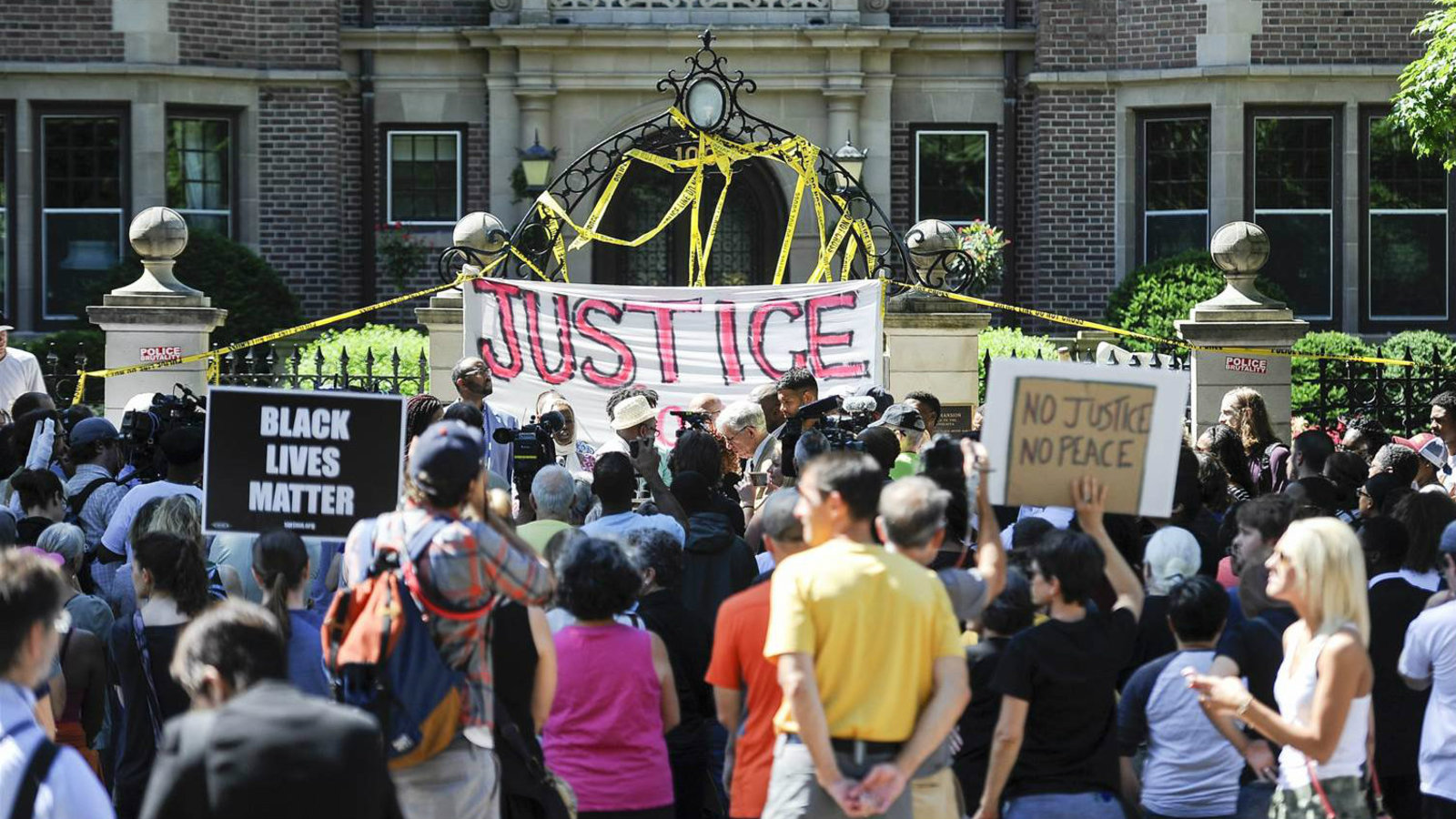
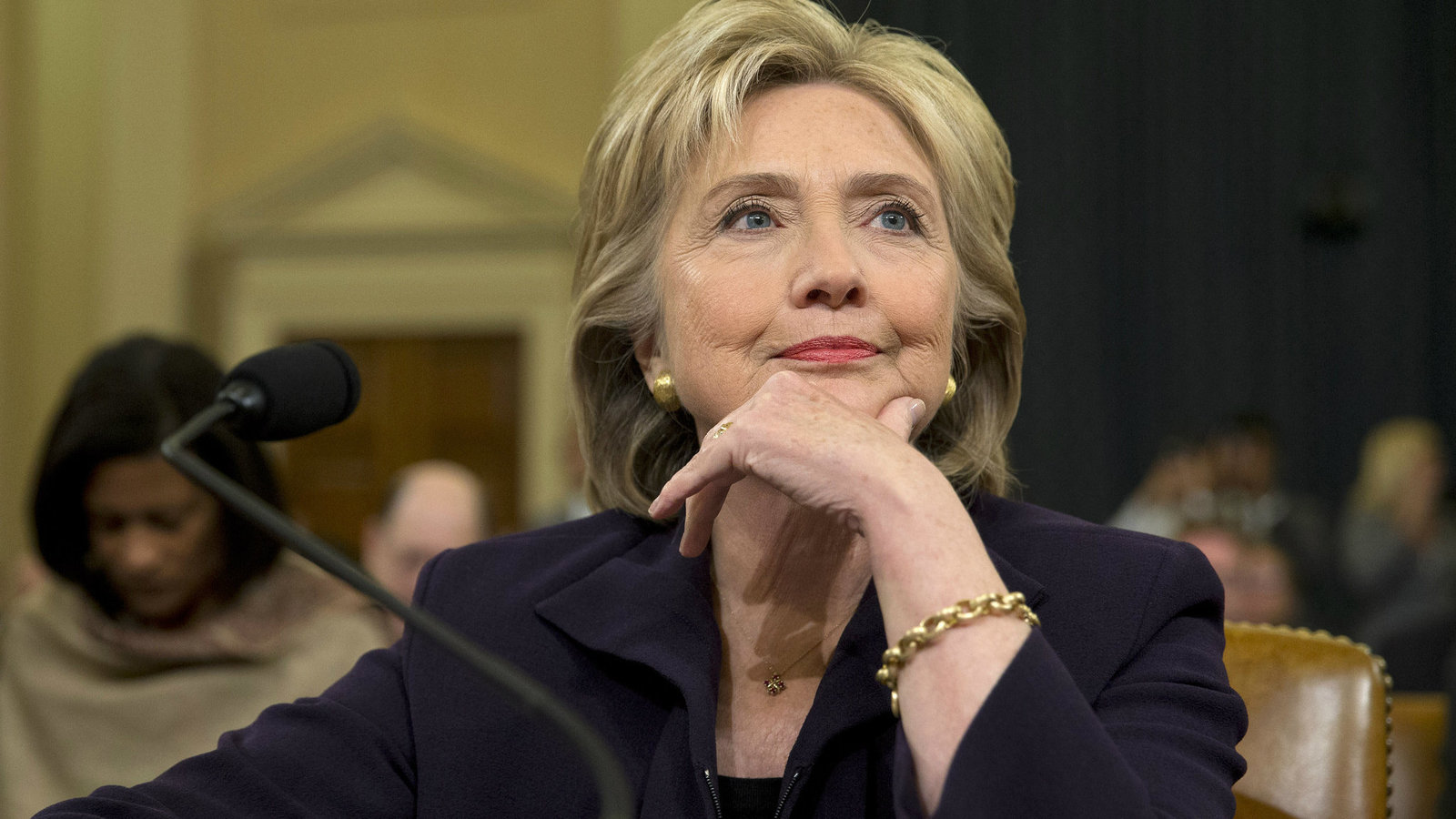
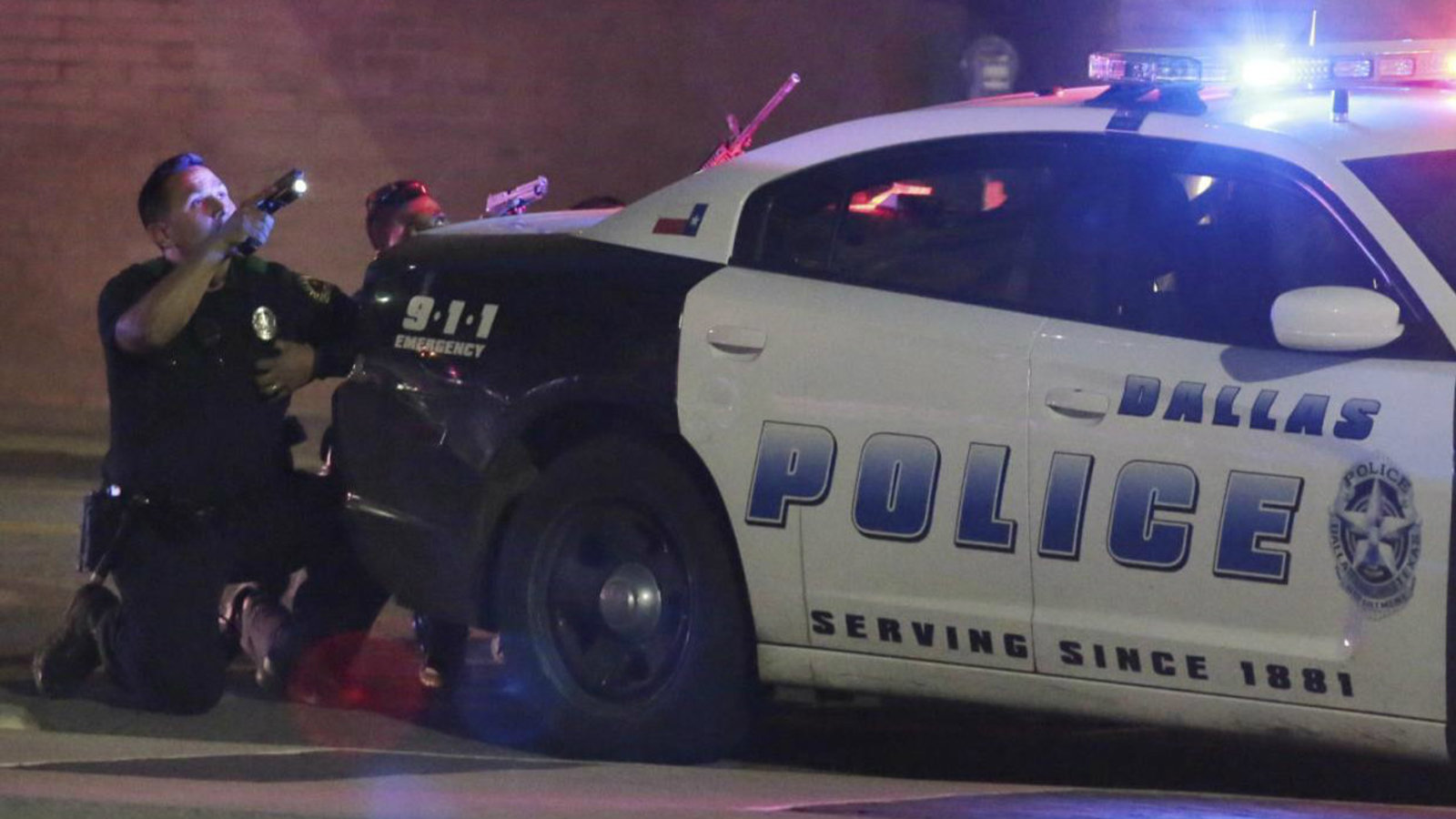
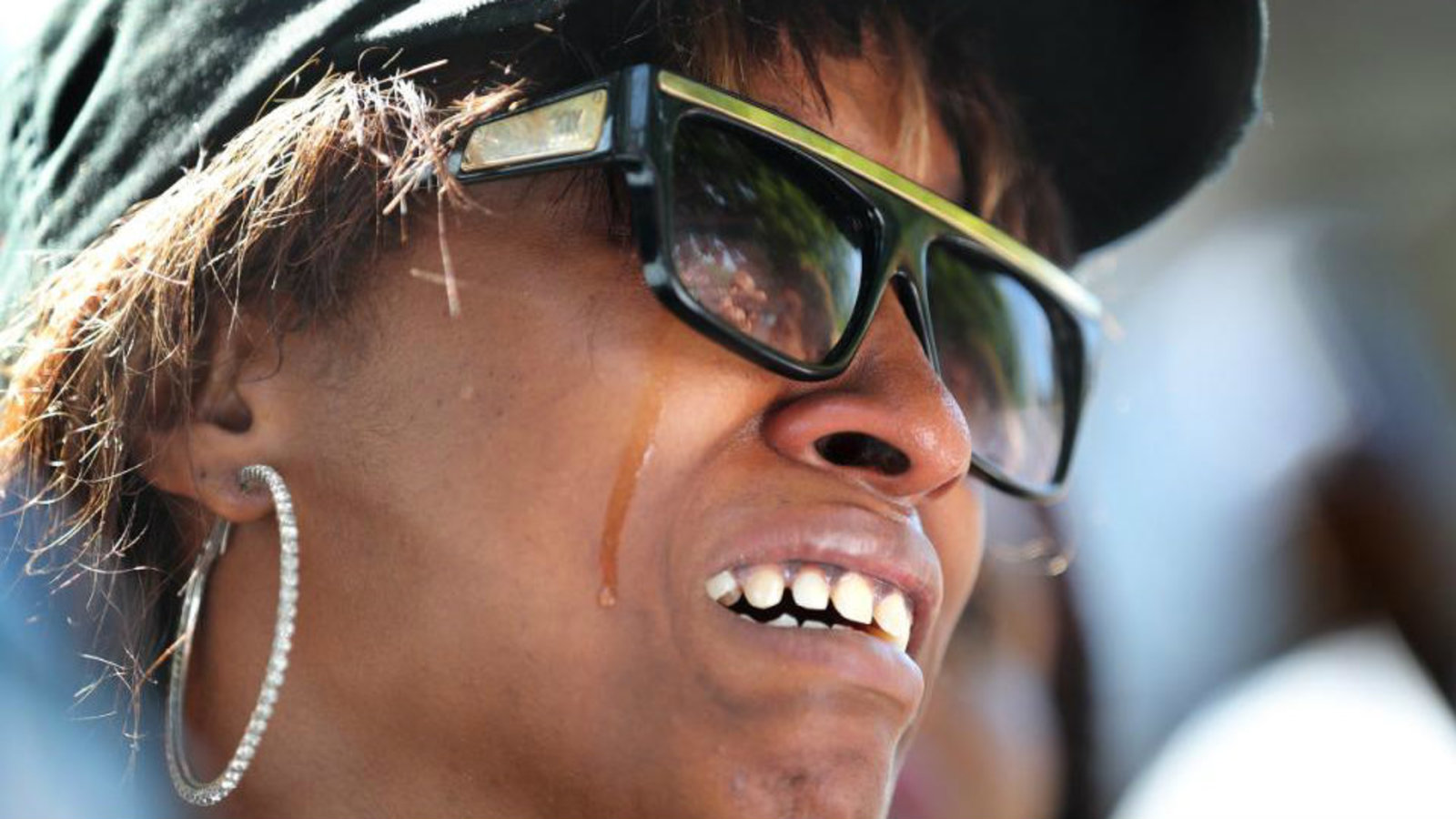
The primary lesson that I draw from this history for America at this moment is the reality, the preciousness, and the power of truth in the public square. When I say America at this moment, I am thinking of 1) the killing by police of Alton Sterling in Baton Rouge, Louisiana, and Philando Castile in St. Paul, Minnesota, 2) the sniper killing of five police in Dallas, 3) the FBI non-indictment of former Secretary of State Hillary Clinton after her repeated, FBI-acknowledged falsehoods and “extremely careless” handling of classified material, and 4) the continued defense by national leaders of the legitimacy of killing children in their mother’s wombs.

The events underline the vital necessity of embracing the reality, preciousness, and power of truth in the public square at this moment. Let’s take them in reverse order — power, preciousness, then reality.

The Power of Truth


The fact that most people carry cameras now — in their smartphones — has made the killing of black men by the police a matter of powerful truth. Of course videos can lie. They are only part of the story, often limited to a short clip of the end of a larger event, offering us only one angle. But they also deliver truth, undeniable truth. Whatever stories and rationales for these killings are brought forward, they will have to square with the visual truths of these videos.

This means that the enormous power that resides with the police will be increasingly accountable. This is a good thing. And any political move to make it legal to prevent videos at crime scenes, or confiscate videos without a warrant, or destroy audio-video evidence should be viewed as Nazi-like silencing of truth in the public square.

Or Is Truth Powerful?


While the power of truth is rising with the ubiquity of the smartphone, truth seems less powerful in holding high-ranking people accountable. The five hours of testimony by James Comey, Director of the FBI, on July 7 before Congress left many of us speechless at the concessions of Secretary Clinton’s falsehoods, concessions of her recklessness in handling national security, and the insistence that law-breaking, in her case, would need to include intention to break the law.

black lives matter
But even if the former Secretary comes through this scandal unindicted, the power of truth is not dead. It may yet press itself on the people — if not the investigators. Where the media remain free, and dissent is not punished by the law, the power of truth will track down every deceiver. And sooner or later, it will be shouted from the house tops.

The Preciousness of Truth


Truth is also precious. Suppose a black man is seated in his car with his hands raised, having just told an officer that he has a weapon and a concealed-carry permit. And suppose the policeman tells him to hand over his ID. The man in the car knows that if he reaches for his wallet he may be shot, and the story may be told that he was going for his gun. Among the many precious things at this moment, one of the foremost is this truth: You should not shoot me for reaching for my ID the way you told me to. Or to put the truth another way: It is wrong to shoot a man for complying with police instructions. This is a truth. And it is precious beyond all reckoning.

I don’t know if that is what happened in the case of Philando Castile in St. Paul. That is not my point. My point is truth is precious. In saying that it is precious, I am saying that it has a claim on the conscience of officer and accused. Both should treasure this truth: You should not shoot me for reaching for my ID the way you told me to. It is wrong to shoot a man for complying with police instructions. When a victim of injustice has no power, he still has something very precious. He has this transcendent truth: You should not do this to me. This is wrong.

black lives matter
Or suppose a white police officer, in complete self-control, is standing guard to protect demonstrators against police violence. And suppose he is in the rifle-sights of a sniper who aims to kill as many whites as he can. And suppose that police officer has never disrespected or mistreated a black person in the way of his duty. At that moment, it is a precious truth — precious beyond calculation — that killing him because he is white is wrong. This truth is so precious a whole city — a whole nation — might treasure it highly enough that it becomes part of a foundation of a common life together.

Truth Is Precious for the Unborn


Truth is also precious for babies in their mothers’ wombs. It is a precious truth that a baby should not be killed simply because a stronger person chooses to have the baby eliminated. That is what Nazis did with Jews and Poles and homosexuals and stubborn Lutheran pastors. They did not treasure this truth: Killing people because of race or nationality or religion or position in the mother’s womb is wrong.

That is a precious truth. Wherever a society ceases to treasure this truth, eventually violent elimination of unwanted humans happens. It has been happening to the unborn for a long time. And it is no secret that the founder of Planned Parenthood, Margaret Sanger, prioritized the elimination of black babies. And there may well be causal lines between the abortion of blacks and the aim to eliminate them in other ways. Such lines are drawn in the soul of a society.

The Reality of Truth


Finally, the reality of truth. It is a great irony that the philosophical, academic, and social power of left-wing elites since World War II have devoted themselves to showing that there is no truth. It has no transcendent reality. Truth, they say, is an outmoded enlightenment construct created to justify political, racial, and gender privilege.

This is an irony because it is precisely these left-wing elites that cry most loudly against injustice, not realizing that the limb of truth that they just sawed off is the only one that can provide trans-racial, trans-political, trans-gender, trans-cultural support for justice, and decisive resistance to injustice.

black lives matter
These advocates for freedom from truth cover their evisceration of truth-claims by crying out against the oppression of the poor and weak. But in nullifying truth, they strip the poor and weak of the one great weapon they still have: the truth that there is such a thing as justice, and this is not it. Truth is a mighty weapon in the hand of the weak. The powerful have been playing academic word games for seventy years with deadly fallout.

If you nullify the reality of truth, you make the finger on the trigger to be god. If God doesn’t make right, might makes right. If truth has no reality, what can an innocent man say when he is about to be shot? Black driver with no record, or newly married white cop. May he say, “Stop! This is not right”? That is a claim to truth. The truth is: Innocent people should not be killed. If that truth is not real, whoever has the guns is “right.” For there is no transcendent “right” or “true.”

Transcendent Truth


But there is a transcendent ground of truth. The reality, preciousness, and power of truth are rooted in God and his Son Jesus Christ. God sent his eternal Son into the world to clarify and establish the truth. Jesus said to Pilate, “For this purpose I was born and for this purpose I have come into the world — to bear witness to the truth. Everyone who is of the truth listens to my voice” (John 18:37).

Then a few hours later, he died, so that sinners who embrace him as the truth might be forgiven all our sins (Acts 10:43). “He himself bore our sins in his body on the tree, that we might die to sin and live to righteousness” (1 Peter 2:24). Then he rose again from the dead to vindicate his truth, and sent his people into the world as witnesses to the truth.

He said, “I am the way, and the truth, and the life. No one comes to the Father except through me” (John 14:6). And again, praying to his Father in heaven, he said, “Your word is truth” (John 17:17). Jesus Christ is Truth in person. Scripture is Truth in writing.

Nevertheless, since God made all people in his image, and since he reveals himself in nature (Romans 1:18–23) and in the human conscience (Romans 2:14–15), Christians are not the only people with access to truth. This is why a pluralistic society may find common ground that makes possible some measure of civic order.

Nevertheless, the fullness and apex of truth is found in Jesus. And the Scriptures he authorized are the only authoritative access to what that fullness of truth is. This means that when all is said and done in history, the reality, preciousness, and power of truth will triumph. At the coming of Christ, the whole cosmos will be brought into the sway of truth — The Truth.

Until then, followers of Jesus bear witness to the truth. We wave the banner of the reality and the preciousness and the power of truth. And we renounce all policies, procedures, laws, customs, and tyrannies that obscure or silence the truth — whether in police procedures, national politics, or the industry of child-killing cloaked in the evil rhetoric of reproductive freedom.

https://dailypost.wordpress.com/prompts/false/ 

https://jwdwrites.wordpress.com/2016/07/08/false/ 

https://delicatebuffalo.wordpress.com/2016/07/08/fighting-off-the-goblins/

https://saschadarlington.wordpress.com/2016/07/08/poem-for-julys-first-8-days-of-daily-prompt/

https://imagesofheaven.wordpress.com/2016/07/08/troll/

Friday, July 8, 2016

If Pregnancy Termination is Just a Medical Procedure...

According to Abortion Services in New Zealand:
You are able to have counselling after your abortion procedure also. Your partner may be involved if you request it.

This counselling aims to assist you with any unresolved issues or feelings related to the pregnancy termination and to support your emotional recovery after an abortion.

Hold on. My son has had an operation and he was not offered any form of professional counseling pre or post operation. My wife has had multiple operations and in no case was she offered professional counseling pre or post operation.

How often are we told abortion is a medical procedure similar in significance and complexity to an appendectomy.

My sister had an appendectomy. There was no offer of professional counselling prior to the invasive operation. There was no offer of professional counselling in the aftermath of the invasive surgery.

abortion medical procedure

Why the Offer of Counseling?


Maybe it's because so many women are having abortions on the grounds that continuing their pregnancy would cause a serious threat to their mental health.

One would think in such situations, what is required is not a medical procedure in the sense of removing the pregnancy, but psychological and/or psychiatric care.

After all, if the problem is not the pregnancy in and of itself, but the mental health risk presented by the continuation of that pregnancy... address the issue, the mental health issue - not the physical circumstances that are simply drawing out that underlying problem.

Or maybe there is something more sinister going on.  Maybe there is no real mental health risk in play.  Maybe that's just the easiest way for certifying consultants and abortion providers to offer their services on demand, regardless of the real reason.

I applaud those willing to go through the statistics and reports to expose the reality of illegality of the abortion industry in New Zealand.

Justifying Keeping Matters Under Wraps

Justifying keeping matters under wraps

Mum and Dad don't need to know the haps

Why We Keep Things Secret


Families broken

Mum can't know

Lest her daughter

Meet with blow


Permission needed

For panadol

Dark prevails

When wounding souls

Justifying Keeping Matters Under Wraps


The Health Select Committee has decided that parental notification regarding daughters being taken away from school to have abortions puts those daughters at unjustifiable risk.  Not the risk of abortion and it's violent aftermath, but the violence of angry parents.  They have considered the possibility that angry parents, hearing that their teenage daughter is pregnant will subsequently murder their daughters.  Surely, those who would ever face such an abusive family environment would be so much in the minority, that our law-makers are making decisions based on rare and wild xceptions.

Justifying Keeping Matters Under Wraps


The Health Select Committee, through its decision, is denying the majority of caring and concerned parents the basic right to know what's going on in the lives of their teenagers.


Dad's Don't Dance in the Darkness of Daughters Distress

I am a parent.  I love my boy.  What he thinks and says and does is of unparalleled interest me.  What is thought of him, said of him, and done to him interests me also.  There are times when that interest ought to be converted into concern.

It is not unreasonable that I'm informed about these thoughts, words, and deeds.  Often I am able to extrapolate that information from him directly, though being 4 years old, not everything that goes on in his word is communicated amidst our interaction.

Thankfully, Ashley picks up, in other conversations, things missing from father and son dialogue.  Should even their conversation fail to pick up on that, especially when  his world goes beyond the home, there are others who are more than willing to fill in gaps.

If he is at preschool and get's hurt, Ashley (at the very least) is told.  There is no need to keep anything a secret.

The prospect of some preschool children attending an off-site gymnastics program requires that parents not only know but give consent.  His enrollment forms require us to grant permission for him to be given rudimentary medicines and basic first aid.

Dad's Don't Dance in the Darkness of Daughters Distress

Disappearing Daughters


I understand the differences and the complexity.  But many of New Zealand's teenagers are being taken away from school for medical consultations without their parents even knowing.

What's more, major surgical procedures are being carried out on many of these same New Zealand teenagers, all covered in the shroud of secrecy.

I'm talking about abortion.  Under current New Zealand law, there is no provision that a pregnant teenager's parents be even informed (we're not talking about consent) that their daughters are going through crisis.

Recently, Hillary's Law made it's way into the media.

She discovered that her daughter was suicidal.  But she didn't know why.  It wasn't until well after the fact that she was told that her suicidal daughter had had an abortion.  This teenager's abortion procurement was something her school kept a secret from her parents.

On the back of that, Hillary knew she had to do something.  A petition was presented to parliament, to be considered by a Select Committee.

Knowledge Leads to Violence


The Select Committee decided that they would take it no further.  Instead, citing the possibility that some daughters would be met with fatal parental backlash, they decided it wasn't in the best interests of kiwi teenagers facing crisis pregnancy that their parents at the very least, know what their daughter gets up to at school.

I know it's not the same.  I know it's complicated.  I know that there are nutty parents who would seek to do their daughters violence.  But their daughters are subjected to an unimaginable violence when they are lead into the darkness of the abortion industry without even the ability to grope for mum or dad's hand.

It's a lot to process.  I'm not suggesting my blogging is going to make much of a difference, or that my comparisons do any justice to the issue - but I hope that I can contribute to the discussion - as a parent who loves his boy in such a way that I am interested in what's going on in his life.

Thursday, July 7, 2016

Hillary's Law Calls for Parental Notification

Having faced the attempted suicide of her teenage daughter, kiwi mum petitioned the government, asking that there be a law change.  Hillary's Law calls for parental notification in cases where there teenage daughters are taken by education providers for abortions.

Sadly, the Select Committee decided the consequences of parents knowing what's happening to their daughters is not something they are willing to contend with.  Instead, it's better that no parent know what's going on.

This is my poetic reflection:


Hillary's Law Parental Notification


So your daughter needs a panadol

There is a much greater toll

In things of which you ought to know


She's going on a school field trip

For that you'll sign a permission slip

While others are lead away

Hillary's Law Parental Notification


Hillary is lost for words

Like her voice has not been heard

Other's silenced too


Why can't they know about their girls?

When treated like stolen pearls

Why darkness must you remain?


Kiwi parents, they ought to know

When daughters dealt a massive blow

That often proves too much


Daughters being whisked away

During the darkness of the day

To have more than just a panadol


What do they think behind closed doors?

When loving kiwi mum implores

To care is first to know


It's not a question of consent

When innocence is being spent

One knows and so one cares


Hillary's law has been shot down

Makes MP's sadistic clowns

While daughters cry in darkness.


New Zealand Nurse Changes Her Mind about Euthanasia

http://theleadingedgeblog.com/im-a-nz-nurse-who-used-to-support-euthanasia-but-what-ive-seen-has-changed-my-mind/

I’m a registered nurse, of admittedly only a short career of seven years. I worked for three years in the hospital wing of a rest home as I studied, and since graduation I have worked in various hospitals around the country.

When I began this career path I was on the fence about the issue of assisted-suicide and euthanasia. As a practising Catholic it was never a choice that I would make for myself, but I felt I could not in conscience deny others, who did not share my beliefs, this supposed ‘right’.

Yet, frighteningly, it did not take long for my opinion to completely change based on events I witnessed.

There was the family that stood in the corridor of a very busy ward and argued about why the individual who held power of attorney was wasting everyone’s time by requesting medical staff keep the patient alive, and that they instead needed to refuse treatment and let nature take its course otherwise, on discharge, the patient would have to go into care and that would eat into their inheritance.

What was this horrible disease that was stripping this individual of their dignity?

A chest infection, which was responding well to intravenous antibiotics.

Then there was the case of the elderly patient who suffered a stroke, nothing too serious, and they started to recover – they were actually a little more peppy, their quality of life rallying. However, the frustrations of adult children and a tired spouse resulted in this patient being placed on a morphine pump. They were dead within a week. While I was only a witness to this situation and obviously didn’t have the full story, to this day I doubt very much the patient was aware of their impending fate.

There was another patient, who, other than being elderly and frail, had no significant co-morbidities and was not in any way terminally unwell. They were not suffering from disease effecting cognition or memory, and they certainly weren’t in any pain.

Yet the choice was made by family, in conjunction with medical staff, to install the morphine pump under the official assumption that a cererbal event had taken place. Again, dead within a week. Again, the patient’s knowledge of this decision was questionable.

There’s been countless family members who tell me that the patient is no longer their parent, their spouse, their sibling, that they’re dead inside, and could I please just give them more morphine to hurry things up a bit.

Then there’s the recent media attention over the practice of “granny dumping”.

This is where a family, for whatever reason (usually frivolous), dumps their elderly relative at the emergency department so they can take off on an overseas holiday, or because they just can’t be bothered checking in on them over a long weekend.

I once overheard a family member tell their hospitalised relative to inform staff that they were experiencing chest pains so that they could remain in hospital in order that the healthy family member wouldn’t miss their flight to Fiji.

I have found myself comforting many elderly patients who, through heaving sobs, recount their belief that they are a burden on their families, that they’d be better off dead, that they are cutting into their family’s inheritance, that they are of no more use to anyone, or that they are a constant nuisance on myself and my colleagues.

They often relate their desire to die as if it was their own idea, free of duress and the heartache of abandonment by those closest to them, yet their body language betrays them and tells a completely different story about what is really going on.

Sometimes it appears as if the family’s desire for their hospitalised relative to pass is driven more by their own fears around illness, death and a powerful aversion to suffering, or even being around those whose suffering cannot be quickly resolved.

Then there’s the family members who have absolutely no shame in admitting they want their relative dead.

I had a family member even ask me once if I could just cut the fingers off a deceased relative in order to remove the expensive rings.

I have heard similar comments made more than once, and it was never in jest.

People in support of euthanasia speak of fear mongering by those in opposition to a law change, and that with adequate safeguards we can ensure the system is not abused.

The media bombards us with tragic stories of intelligent, beautiful people with terrible diseases seeking legal recourse to have a doctor kill them. We are shown images of these dying people from better, healthier days – stunning wedding photos, exotic holiday shots, a happy family celebrating a graduation.

These stories are all very well and good, and I empathise with them – I have seen people die utterly awful deaths due to delays in initiation of palliation. I know what these people could face if the system fails them.

Yet they have networks of friends who support them, family who love them, and oftentimes celebrities and high profile pro-euthanasia groups getting behind them with funding and public relations campaigns designed to change the law.

The problem though is that their personalities and their photogenic natures are usurping intelligent debate about this very serious life-and-death issue.

And these slick, cleverly marketed, and highly emotive PR campaigns aimed at trying to legalise assisted-suicide are also distracting attention away from the truly vulnerable people in this debate – the elderly widow with a lot of money and a touch of dementia, the adult with Downs Syndrome whose parents are now dead, the old man with cancer who is estranged from his children while a grandchild wants his property, the lonely schizophrenic with a history of self-harm.

Furthermore, a lot of what appears in the media presenting the pro-euthanasia view is very disingenuous.

I have never worked in palliative care, but I have been a part of the process for patients outside of a hospice setting, and there is a lot of misunderstanding about what it actually is. A patient is not just dumped in some cold bed in a creepy old house with a grumpy nurse who chucks a few paracetamols at them from time-to-time, while they wither away and die in agony wallowing in their own faeces.

With palliative care there is a beautiful attention to holistic nursing, a consideration of the entire person, their symptom management, and a care that encourages involvement from their Whanau and friends.

Likewise, some articles present the concept that assisting a terminally ill patient with powerful analgesics is somehow euthanasia when it is definitely not. Instead it is morally legitimate and a part of good disease management to ensure a terminally ill patient is provided with adequate pain relief.

There may come a time when those medications are increased in dose to combat the discomfort, with the unintended side effect of the patient drifting into deep sleep and then into death, but this is not euthanasia, it is not unethical and it is definitely not illegal in New Zealand.

There is not so much a reasoned debate going on as there is just a slew of stories and slogans designed to tug at the heart, to illicit sympathy and stir in us an emotional desire to demand death from our doctors for these beautiful people.

But what about the elderly? The mentally disordered? Those with intellectual and physical special needs? The lonely? The poor?

What will they get out of all of this? Humanity has gone down this road before, it didn’t end well.

There’s a saying: hard cases make bad laws.

To those who support euthanasia, please do the research, please look into the danger that your support for euthanasia presents to the truly vulnerable. Please look into the wonderful work being done by palliative health care professionals in New Zealand.

As I reflect on the many instances of heartlessness that I have seen over my career, it strikes me that there’s no predictive formula for abuse. It cuts across all demographics, all areas of life, all diseases and disabilities.

My experience tells me that there can never be any sort of effective safeguard written into an assisted-suicide law that will ever give protection to the most vulnerable members of our community.

That’s why we need to focus our efforts on ensuring that people live with dignity whilst dying, as well as ensuring that they are afforded care and protection when they are at their weakest by medical professionals who have been encouraged by the state to uphold life and it’s inherent sanctity.

Exclusive article cross-posted from The Leading Edge blog.

New Zealand Nurse Changes Her Mind about Euthanasia